 by admin
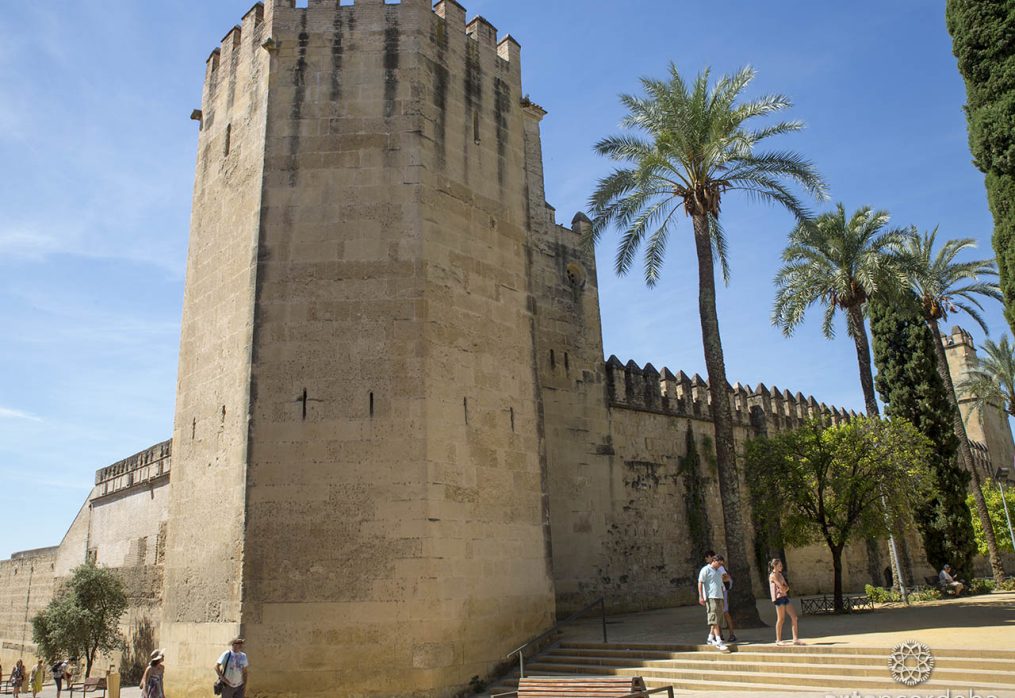
Every time you walk along the walls of the Alcázar of the Christian Monarchs, you are treading on the work of Alfonso XI of Castile, the king who in the 14th century decided to build a new fortress-palace beside the Guadalquivir. He came to the throne as a baby, survived one of the most turbulent minorities of medieval Castile and became one of the most powerful monarchs of his time.
In this article we focus on the king himself: who he was, how he ruled and why his name is forever linked to the Alcázar of Córdoba.
Who was Alfonso XI: a king from the cradle
Alfonso XI was born in Salamanca on 13 August 1311, the son of Ferdinand IV of Castile and Constance of Portugal. His father died suddenly in 1312, when the boy was barely one year old, and the child inherited a crown that his relatives would fight over for more than a decade.
A minority full of tension
The regency fell to his grandmother, Queen María de Molina, one of the great political figures of the age, who had to share power with several princes of the royal family. Their rivalries plunged Castile into instability: feuding nobles, divided cities and an ever-active frontier with the Nasrid Kingdom of Granada. María de Molina died in 1321 and things got even worse.
Coming of age and asserting authority
In 1325, aged just fourteen, Alfonso XI was declared of age and began to rule in his own right. From the outset he made it clear that he would not tolerate challenges: he dealt harshly with the most rebellious nobles and gradually imposed the crown’s authority on an aristocracy used to acting as it pleased.
Alfonso XI and the Alcázar of the Christian Monarchs
In 1328 the king ordered a new fortified residence to be built in Córdoba. He chose a site steeped in history: part of the grounds once occupied by the old Andalusi alcázar, the seat of Umayyad power for centuries.
Córdoba was then a key stronghold, very close to the Granada frontier. The new alcázar had to serve at once as a military fortress, a royal residence during campaigns and a symbol of Castilian power in the city. That is why it combines an almost square enclosure, sturdy walls and corner towers with more palatial spaces inside.
The towers and the royal baths
Some of the most recognisable features date from this period, such as the Lions’ Tower, with its Gothic vaults, and the Keep, or Tower of Homage. The royal baths in the Mudéjar tradition are also attributed to his reign, an example of how Christian monarchs adopted Andalusi customs and building techniques.
The warrior king: from the Salado to Algeciras
Alfonso XI’s foreign policy centred on control of the Strait of Gibraltar. The Marinids of North Africa, allied with the Kingdom of Granada, threatened a new invasion of the peninsula.
On 30 October 1340, together with his father-in-law Afonso IV of Portugal, he defeated the Marinid and Nasrid armies at the Battle of Río Salado, near Tarifa. It was one of the most important victories of the Reconquista. Four years later, in 1344, he took Algeciras after a long siege that drew knights from all over Europe.
A lawmaker as well as a soldier
Alfonso XI did not rule by the sword alone. In 1348 he issued the Ordinance of Alcalá, a body of laws that set the order of legal sources in Castile and remained in force for centuries. He was also a king devoted to chivalry and hunting, passions that left their mark on the literature of the time.
Leonor de Guzmán and the king’s legacy
Married to Maria of Portugal, mother of the future Peter I, the king maintained a lifelong relationship with Leonor de Guzmán, with whom he had ten children. One of them, Henry of Trastámara, would eventually fight his half-brother Peter and reign as Henry II. You can read the full story in our article on Alfonso XI and Leonor de Guzmán (in Spanish).
Alfonso XI died in March 1350 during the siege of Gibraltar, a victim of the Black Death. He was the only reigning European monarch to die in that epidemic. His remains now rest in Córdoba, in the Royal Collegiate Church of San Hipólito, alongside those of his father Ferdinand IV.
Frequently asked questions about Alfonso XI of Castile
Who built the Alcázar of the Christian Monarchs?
The Alcázar was commissioned by Alfonso XI of Castile from 1328 onwards, on part of the grounds of the old Andalusi alcázar. The name “Christian Monarchs” came later and refers to the various Castilian rulers who lived there, including Ferdinand and Isabella at the end of the 15th century.
How old was Alfonso XI when he became king?
Just one year old. His father, Ferdinand IV, died in 1312 and Alfonso inherited the crown as a baby. The kingdom was governed by regents, led by his grandmother María de Molina, until 1325, when at fourteen he was declared of age.
How did Alfonso XI die?
He died of the Black Death in March 1350 while besieging Gibraltar. The epidemic spread through the Castilian camp and the king refused to lift the siege. He is the only reigning European monarch to have died of the great pandemic of the 14th century.
Where is Alfonso XI buried?
His remains lie in the Royal Collegiate Church of San Hipólito in Córdoba, next to those of his father, Ferdinand IV. It is a little-known spot among visitors and well worth a stop if you want to follow in Alfonso XI’s footsteps after visiting the Alcázar.
Knowing the story of Alfonso XI brings every tower and wall of the Alcázar to life. If you would like someone to tell you these stories on site, join our guided tour of the Alcázar of the Christian Monarchs.