 by admin
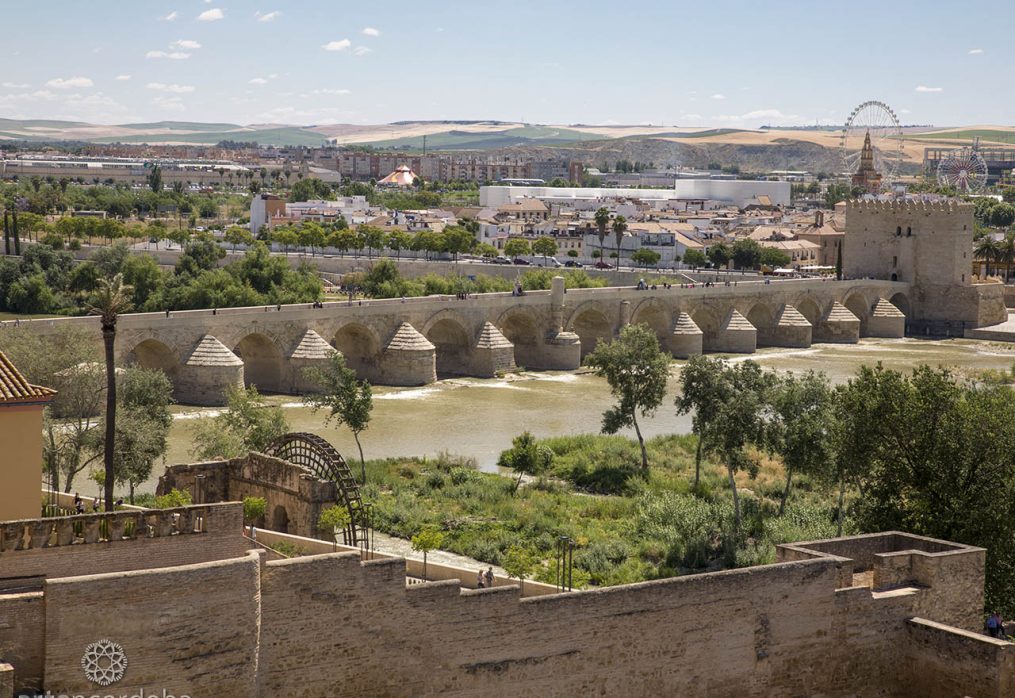
A stone’s throw from the Alcázar de los Reyes Cristianos, beneath the Campo Santo de los Mártires square, lie the Caliphal Baths of Córdoba (Baños del Alcázar Califal), the hammam used by the Umayyad court in the 10th century. Many visitors confuse them with the baths inside the Alcázar, but they are a separate monument with their own entrance and a fascinating story. Here is what they are, what you will see inside and how to fit them into your visit.
What the Caliphal Baths are
They are the remains of a caliphal-era bathhouse commissioned by Caliph al-Hakam II (961-976). They belonged to the great Umayyad Alcázar, the palace of government that occupied much of the area between the Mosque and the river, and they were probably the most important baths in the Córdoba of their day.
Today they can be visited as a small museum on the Plaza del Campo Santo de los Mártires, about a hundred metres from the Mosque-Cathedral and next to the walls of the Christian Alcázar. The route explains bathing culture in al-Andalus, the engineering that made it work and how the building evolved over the centuries.
History of the Caliphal Baths
From the caliphate to the Almohads
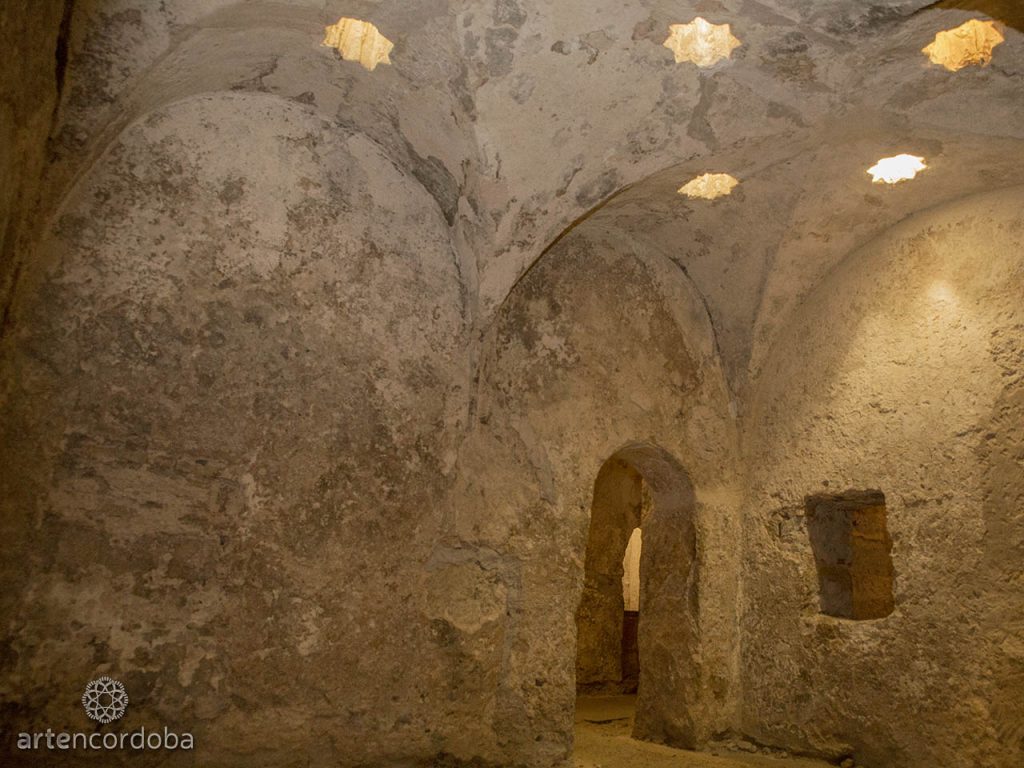
The hammam was built in the 10th century and remained in use after the fall of the caliphate. Under the Almoravids it was thoroughly remodelled and, under the Almohads, it underwent its last major expansion: from that phase comes the hot room covered by a barrel vault pierced with star-shaped skylights, one of the most recognisable images of the complex.
Buried by Alfonso XI
After the Christian conquest the building lost its purpose. In 1328, the same year construction of the new Alcázar began, King Alfonso XI ordered the baths to be covered over to create an open esplanade known as the Campillo del Rey. It is a detail that ties both monuments together and rounds off the story of the king we told in Alfonso XI, the king who built the Alcázar of Córdoba.
Rediscovery and opening as a museum
The remains surfaced in 1691 during building work in the area, but were hidden again. A first municipal excavation took place in 1903, and between 1961 and 1964 researchers Félix Hernández and Rafael Castejón brought the complex to light. After a long process of restoration and museum fitting-out, the monument opened to the public in 2006.
What to see inside the caliphal hammam
Like every Andalusi bath, the route follows the sequence of the Roman baths it descends from:
- Cold room: the first space, to cool down and get ready.
- Warm room: the largest and most decorated, where people spent most time; it was the bath’s main social space.
- Hot room: the closest to the furnace, filled with steam and high temperatures.
Look out for the horseshoe arches on marble columns and capitals, the vaults with star-shaped skylights that let light in without losing heat, and the service area with the boiler and furnace that heated the water and the floor. The museum rooms complete the visit with panels and models explaining how the whole system worked.
Not to be confused with the Alcázar’s Royal Baths
This is where the usual confusion arises. Inside the grounds of the Alcázar de los Reyes Cristianos there are other baths, the Mudéjar Royal Baths, built in Christian times for the monarchs’ use. They are visited with the Alcázar ticket and share some features with the caliphal hammam, such as vaults with skylights.
The Caliphal Baths, on the other hand, are older, Islamic and outside the grounds, on the neighbouring square. Seeing both on the same day is the best way to understand how bathing culture passed from the Umayyad court to the kings of Castile.
How to visit the Caliphal Baths
The monument is run by the City Council and opens Tuesday to Sunday, closed on Mondays. Opening times change between the winter and summer seasons, so check the municipal website before you go. General admission is around 3 euros, with reduced prices for students and free entry for children.
Thanks to its location, it fits perfectly before or after your visit to the Alcázar: walk out of the main gate, cross the Campo Santo de los Mártires and within a couple of minutes you are inside the hammam. Allow some extra time in your plans so you can enjoy both at a relaxed pace.
Frequently asked questions about the Caliphal Baths of Córdoba
Are the Caliphal Baths inside the Alcázar de los Reyes Cristianos?
No. They are an independent monument on the Plaza del Campo Santo de los Mártires, next to the Alcázar walls, with their own entrance. Inside the Christian Alcázar there are other baths, the Mudéjar Royal Baths, which are later and are visited with the Alcázar ticket. It is easy to see both on the same day.
Who built the Caliphal Baths of Córdoba?
They were commissioned by Caliph al-Hakam II, who ruled between 961 and 976, as part of the Umayyad Alcázar of Córdoba. They were later remodelled by the Almoravids and Almohads. In 1328 Alfonso XI ordered them to be buried to create an esplanade, and they were not systematically excavated until the 1960s.
How long does a visit to the Caliphal Baths take?
A relaxed visit takes between 30 and 45 minutes, enough to walk through the three bath rooms, the boiler area and the museum’s exhibition spaces. Because it is small and close by, it is easy to combine in the same morning with the Alcázar de los Reyes Cristianos or the Mosque-Cathedral.
How much does it cost to visit the Caliphal Baths?
General admission costs around 3 euros, with a discount for students and free entry for children. As it is a municipal monument, prices and opening times may vary by season, so it is advisable to check them on the official Córdoba City Council website before your visit.
The Caliphal Baths are the missing piece for understanding the history of the Alcázar before the Christian kings. If you would like to discover the full story with an official guide, book our guided tour of the Alcázar of Córdoba and we will show you how each era left its mark beside the Guadalquivir.