 by admin
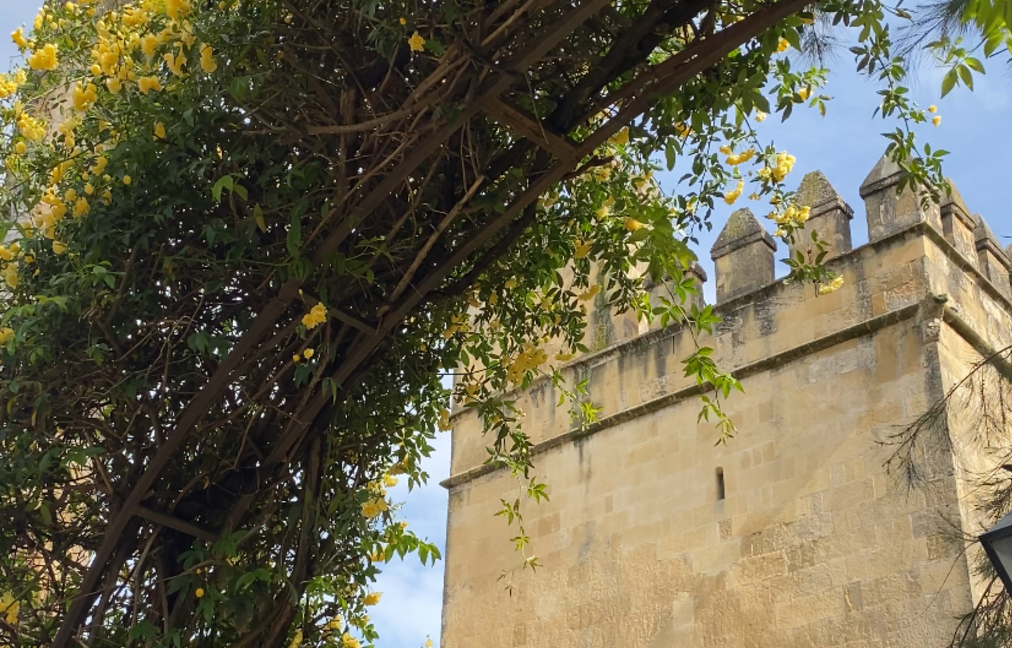
The Alcázar of the Christian Monarchs, in the city of Córdoba, is one of Spain’s most iconic architectural gems. Its history reflects the cultural evolution of the city through the Roman, Visigothic, Muslim and Christian periods. The monument was not only a royal residence but also an important political and military centre.
Origins and construction of the Alcázar of the Christian Monarchs
Roman and Visigothic times
Before the current Alcázar was built, Roman buildings stood on the same site, used as administrative and military headquarters. In the Visigothic era, Córdoba remained a strategic location, although with less architectural development.
The Muslim period
With the arrival of the Muslims in the 8th century, Córdoba became the capital of the Emirate of Córdoba. During this period the Alcázar was transformed into a fortified palace known as the Andalusian Alcázar. Under Abd al-Rahman III, major improvements and extensions were carried out, consolidating its role as a centre of power.
Christian transformation after the conquest
The Alcázar under the Christian kings
After Ferdinand III conquered Córdoba in 1236, the Alcázar passed to the Christian monarchy. In 1328, King Alfonso XI ordered the building to be rebuilt in its current Gothic-Mudéjar style, turning it into a symbol of royal power.
Use as a royal residence
The Catholic Monarchs, Isabella I of Castile and Ferdinand II of Aragon, lived in the Alcázar during the campaign to conquer Granada. In 1486, Christopher Columbus also visited the Alcázar to ask for support for his expedition to America.
Later uses of the Alcázar
Tribunal of the Inquisition
From the late 15th century, the Alcázar became the seat of the Tribunal of the Holy Inquisition, a role it held until the 19th century. During this period its buildings were altered and extended to house the tribunal’s offices.
Military use and prison
Over the centuries the Alcázar lost its role as a palace and was used as a military barracks and a prison. In the 19th century it was refurbished for its new use, and it remained a prison well into the 20th century.
The Alcázar of the Christian Monarchs today
Protected heritage
In 1931 the Alcázar of the Christian Monarchs was declared a national monument (today a Bien de Interés Cultural), beginning a restoration process to bring back its original splendour. Today it is one of the most visited monuments in Córdoba.
Main attractions
The highlights of the Alcázar include the Tower of the Lions, the Keep, the Islamic-inspired gardens with their pools and fountains, and the impressive Roman mosaics on display inside.
FAQ about the Alcázar of the Christian Monarchs of Córdoba
What are the opening hours of the Alcázar of the Christian Monarchs?
The Alcázar of the Christian Monarchs opens from Tuesday to Sunday, with hours that vary by season. We recommend checking the official Córdoba City Council website for up-to-date information.
How much does admission to the Alcázar cost?
General admission is around 5 euros, with reduced rates for students and seniors. Córdoba residents can enter free on certain days.
Are guided tours available?
Yes, there are guided tours in several languages that explore the history and architecture of the Alcázar in depth. You can also book tours that include the Mosque-Cathedral and other nearby monuments.