 by admin
The Alcázar of the Christian Monarchs in Córdoba, one of the city’s most representative monuments, houses many rooms and spaces with a rich history. Among them, the Hall of Mosaics of the Alcázar of Córdoba stands out for its archaeological and artistic importance, offering a window onto the city’s Roman and Muslim past. This article explores the origin of the hall, its historical importance and the preserved mosaics that make it unique.
The origin of the Hall of Mosaics
The Hall of Mosaics of the Alcázar of Córdoba lies within a fortress that was the setting for important historical moments. The mosaics displayed here date from the 2nd and 3rd centuries and were recovered by archaeologists, showing the city’s Roman background. The hall has been used in different stages of the Alcázar’s history and has become one of the building’s most iconic spaces.
Why is it called the Hall of Mosaics?
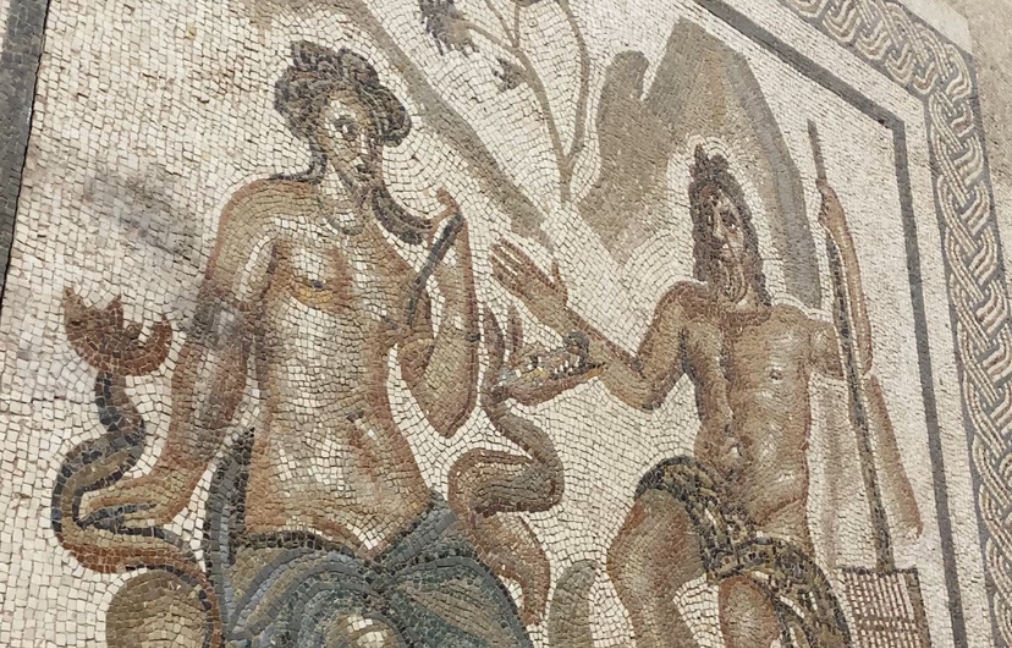
The hall takes its name from the impressive mosaics inside it. These mosaics, displayed on the walls and floor, are among the finest examples of Roman heritage in Córdoba.
Historical importance
The Hall of Mosaics is important not only for its artistic value but also for its historical significance. The mosaics it holds bear witness to Córdoba’s cultural diversity and to its evolution as one of the leading cities of the Roman Empire and, later, of the Caliphate.
What do the mosaics symbolise?
The mosaics have symbolic meaning, showing mythological and geographical scenes as well as everyday life in Roman times. Through them, visitors can glimpse the beliefs and customs of the civilisations that lived in Córdoba over the centuries.
Mosaics preserved in the hall
One of the hall’s greatest attractions is undoubtedly its preserved mosaics. They showcase the artistic mastery of the Roman era. Among the most notable are those with geometric and natural themes, depicting animals, plants and mythological scenes characteristic of Roman art.
How are the mosaics conserved?
The mosaics are preserved thanks to restoration work carried out by heritage conservation experts. This work focuses on protecting the original elements without altering their appearance, using modern techniques that keep the finest details intact.
FAQ
When can you visit the Hall of Mosaics?
The hall is open to the public during the usual visiting hours of the Alcázar of the Christian Monarchs. We recommend checking opening times on the official website before planning your visit.
What other historical features can you see at the Alcázar?
The Alcázar of the Christian Monarchs holds a wide range of historical features, from its beautiful gardens and fountains to other significant spaces such as the royal baths and the Roman sarcophagus. Every corner of the Alcázar bears witness to Córdoba’s history.
Is it accessible for people with reduced mobility?
Yes, the Alcázar of the Christian Monarchs has adapted access for people with reduced mobility, so you can enjoy the visit comfortably and safely.