 by admin
The Alcázar of Córdoba is one of the city’s most representative monuments, a witness to centuries of history and culture. Its imposing structure speaks not only of the grandeur of past eras but also of its defensive purpose. Among the key elements of this monumental complex are its main gate and the entrances connecting the fortress with the city. In this article we explore them in depth so you can learn more about the fortress and its historical importance.
The main gate of the Alcázar of Córdoba
Features of the main gate
The main gate of the Alcázar of Córdoba is a monumental entrance reflecting the building’s majesty and strategic importance. It was not only the way into the Alcázar but also a fortification protecting the people inside from possible attacks. Its design features architectural elements typical of the period, such as arches, stonework and a sturdy structure that conveys security.
The defensive role of the main gate
The defensive role of the main gate was fundamental in medieval times. The gate was equipped with security features such as iron grilles and locking mechanisms that made unauthorised access difficult. Its position also gave a clear view of the surroundings, making it easier to spot threats. The walls and access system were essential to protecting the inhabitants of the Alcázar.
Access from outside and its historical importance
The main entrance to the Alcázar faced the city of Córdoba, making it a key gateway. Over the centuries the gate has undergone some modifications, but it has always kept its defensive character. Access from the city was an important line of communication, not only for people but also for supplies.
The main gate in historical context
Historically, the main gate has been a symbol of power and protection. During the Alcázar’s most splendid periods, it was a key strategic point for controlling entry and exit. Today it remains one of the main features of the Alcázar of Córdoba, showing the legacy of the medieval period.
The walls and defences of the Alcázar of Córdoba
Building the walls
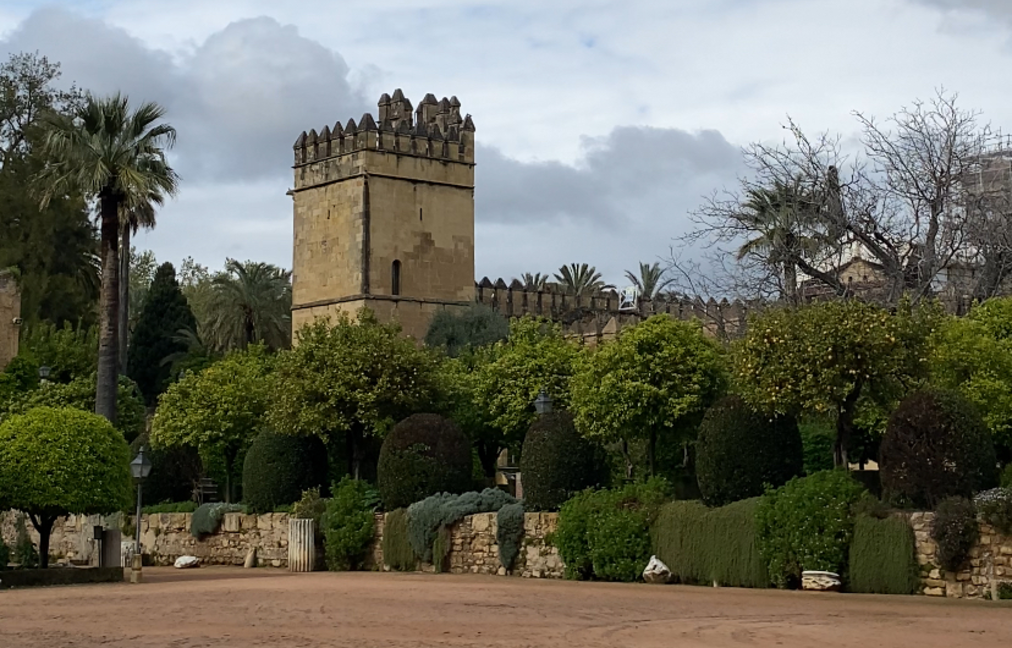
The defensive walls of the Alcázar of Córdoba were built to protect the fortress from invasion. These walls, which incorporate earlier fortifications, are an example of medieval military engineering. Made of large stone blocks, they offer both strength and an imposing appearance. Their solidity was crucial to the security of the Alcázar for centuries.
The role of the walls in defence
The walls marked out the complex and protected it from external attack. As well as their defensive function, they acted as barriers to control access and ensure the survival of those sheltering inside. During invasions and territorial struggles, these walls were key to the occupants’ resistance.
Features of the Alcázar’s walls
The walls of the Alcázar are notable for their great thickness, which gave them formidable resistance to attack. They are made mainly of limestone, a material abundant in the region, providing stability and durability. Building them was not only a technical challenge but also a display of the power of the rulers of the time.
The walls in Córdoba’s history
The walls of the Alcázar have witnessed major historical events, from the struggles between Muslims and Christians to the consolidation of power in the region. Their survival to the present day helps visitors understand the context in which these events unfolded. The walls not only protected the Alcázar but also represented the defence of a territory crucial to Córdoba’s history.
The gate and the walls as heritage
The heritage value of the gate and walls
Both the main gate and the defensive walls of the Alcázar are key elements of Córdoba’s historical heritage. They bear witness to medieval history and symbolise the city’s cultural wealth. Conserving them is essential to preserving Córdoba’s identity and allowing future generations to appreciate the grandeur of its past.
The gate and walls in cultural tourism
Interest in the main gate and walls of the Alcázar has grown considerably in recent years with the rise of cultural tourism. More and more people visit Córdoba to explore these monuments and learn about their history, helping to promote the city as a cultural destination.
Restoring the gate and walls
Restoring the main gate and the walls of the Alcázar is an ongoing process aimed at preserving their integrity and original beauty. The work is carried out carefully, respecting traditional building methods, so that future generations can continue to enjoy these historic structures.
FAQ
What is the history behind the main gate of the Alcázar of Córdoba?
The main gate of the Alcázar of Córdoba has a rich history. This monumental entrance was the main way into the fortress and one of its key defences. Its construction reflects Córdoba’s strategic importance at the time, and it was a symbol of power and protection. Although it has been modified over the centuries, it remains one of the Alcázar’s main attractions.
What was the purpose of the Alcázar’s defensive walls?
The main purpose of the defensive walls was to protect the fortress from invasion and attack. They were designed to withstand military assaults and to control access to the complex. They were also a symbolic barrier marking the boundary of the fortress and showing the military strength of the time.
Why are the main gate and walls so important for Córdoba’s heritage?
The main gate and the walls are essential parts of Córdoba’s historical heritage because of their role in the city’s medieval history. They bear witness to the defence of the Alcázar and represent the resilience of Córdoba’s people over the centuries. Conserving them is crucial for the city’s historical identity and for the enjoyment of visitors and locals alike.