 by admin
How the architecture of the Alcázar evolved through history
Roman and Visigothic origins
The architecture of the Alcázar of Córdoba has its origins in Roman times, when the city was an important administrative centre of the Empire. Public and military buildings, including defensive structures, are believed to have stood on this site. Under Visigothic rule, many of these buildings were reused and adapted, particularly for religious and administrative purposes.
The Islamic period and the building of the Alcázar
Under the Umayyads, Córdoba became one of the most important cities in the Islamic world. In the 8th century the Andalusian Alcázar was built, and it grew over time to include majestic courtyards, gardens and defensive structures. It was organised around courtyards with fountains, following the Islamic architectural tradition of using water as a key element. The walls, towers and spatial layout combined functionality and beauty, reflecting the Umayyad influence on the architecture of the Alcázar of Córdoba.
Christian transformations
After the Christian conquest in 1236, the Alcázar was remodelled by the Christian monarchs, especially Alfonso XI. During this period its walls and towers were reinforced to give it a military, defensive character. Gothic and Renaissance elements were introduced, and interior spaces were adapted to house the monarchy and, later, the Inquisition, which used it as a tribunal. The layout of the rooms was also changed to reflect a more Western organisation, with large halls and decoration typical of the period, further enriching the architecture of the Alcázar of Córdoba.
Building materials and their historical significance
Stone and masonry
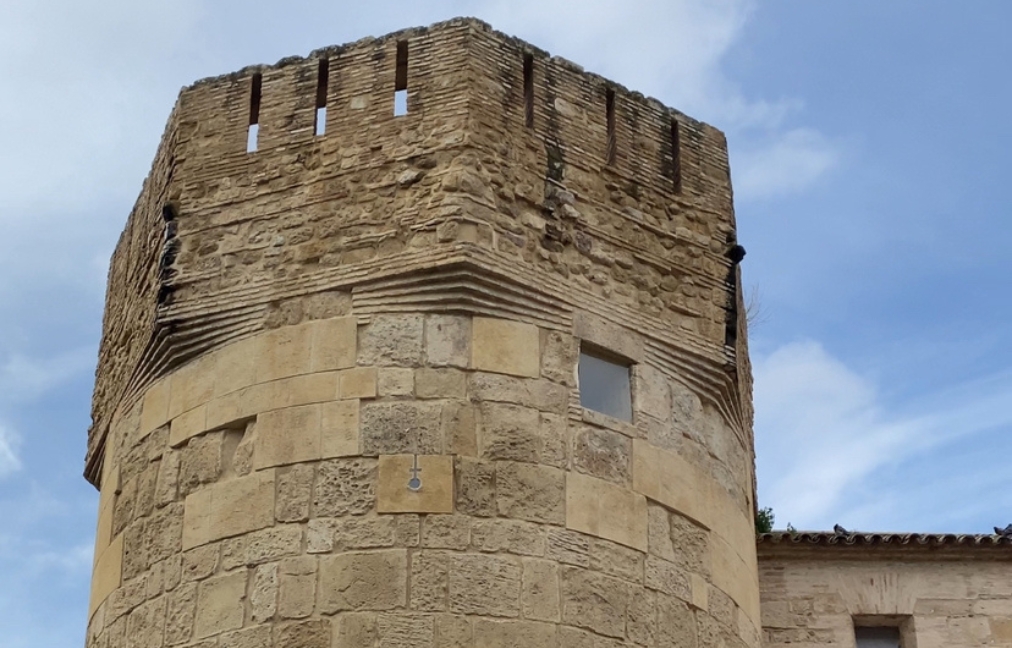
Limestone and masonry have been fundamental materials in the construction of the Alcázar. Their strength and local availability allowed the complex to stand for centuries. They were used in walls, towers and foundations, giving stability and solidity to the architecture of the Alcázar of Córdoba.
Marble in decorative elements
Marble was used especially in columns, fountains and floors. Sourced from nearby quarries and other parts of the Mediterranean, it added a sense of luxury and refinement typical of both Islamic and Renaissance architecture within the architecture of the Alcázar of Córdoba.
Tiles and decorative features
Glazed tiles and mosaics beautified many rooms of the Alcázar, reflecting Islamic and Mudéjar art. The symmetry and geometric patterns of these decorations represented the perfection and order of the universe according to Islamic thought, blending uniquely into the architecture of the Alcázar of Córdoba.
Islamic influence on the architecture of the Alcázar
Courtyards and gardens
The gardens of the Alcázar reflect the Islamic vision of paradise, with fountains, groves of orange trees and geometric designs. These spaces provided beauty and coolness and also had political and social functions as places of reception and rest, essential elements of the architecture of the Alcázar of Córdoba.
Horseshoe arches and plasterwork
Horseshoe arches are a hallmark of Islamic architecture in al-Andalus. Their curved design brought lightness and elegance to buildings, while plasterwork with inscriptions and floral designs added great detail and symbolism to the architecture of the Alcázar of Córdoba.
Water as an architectural element
Fountains and pools were decorative but also helped regulate the temperature in the courtyards and gardens. In Islamic architecture, water symbolises purity and life, creating an atmosphere of tranquillity and spirituality that defines part of the architecture of the Alcázar of Córdoba.
Renaissance and Christian elements in the Alcázar
The Hall of Mosaics
This space houses Roman mosaics recovered from archaeological excavations. They became a key part of the Alcázar’s decoration, strengthening the link between Roman Córdoba and Christian Córdoba and enriching the architecture of the Alcázar of Córdoba.
The towers and their defensive role
The towers of the Alcázar, such as the Keep and the Tower of the Lions, were reinforced in the Christian period to improve the defence of the complex. These structures were strategic points for watching over and protecting the city, a fundamental part of the architecture of the Alcázar of Córdoba.
FAQ
What type of architecture dominates the Alcázar of Córdoba?
The Alcázar combines Islamic, Gothic and Renaissance elements, reflecting how the architecture of the Alcázar of Córdoba evolved over the centuries.
What is the most representative architectural feature of the Alcázar?
The gardens and courtyards with fountains, along with the horseshoe arches and defensive towers, are among the most distinctive features of the architecture of the Alcázar of Córdoba.
How have restorations affected the Alcázar?
Restorations have preserved the original structure and made it possible to recover mosaics, walls and gardens, ensuring the historical conservation of the architecture of the Alcázar of Córdoba.