 by admin
During the 1480s, Córdoba became one of Castile’s de facto capitals. The Catholic Monarchs in Córdoba spent long periods in the Alcázar, which stopped being just a fortress and became a royal residence, headquarters and seat of government. But what was daily life like for Isabella and Ferdinand within these walls?
In this article we do not focus on the battles but on the everyday life of the court: where they lived, who came with them, what happened in their family and why the Córdoba Alcázar was the setting for some key moments of their reign.
Why the Catholic Monarchs chose Córdoba
The main reason was geography. From 1482 the monarchs set out to conquer the Nasrid kingdom of Granada, and Córdoba was the large Christian city closest to the frontier. It had good communications along the Guadalquivir valley, room to house troops and supplies, and a royal building ready to receive the court: the Alcázar built by Alfonso XI in the 14th century.
We cover the military side of that period in the Granada campaign prepared from the Alcázar. Here we are interested in what happened while the troops were away.
A travelling court that settled in the Alcázar
The 15th-century Castilian court had no fixed capital: it travelled with the monarchs from city to city. When they arrived in Córdoba, the Alcázar filled with councillors, secretaries, chaplains, ladies-in-waiting, servants, musicians and scribes. Many of them lodged in the houses of the Córdoba nobility and in nearby convents, because the building could not house everyone.
How Isabella and Ferdinand shared the work
While Ferdinand led the spring and summer campaigns on the frontier, Isabella often stayed in Córdoba organising the rearguard: grain supplies, recruitment, funding and care for the wounded. The queen promoted field hospitals that travelled with the army, a novelty highlighted by the chronicles of the time.
Governing from Córdoba
The Alcázar also worked as a seat of government. Letters were dispatched from here, embassies were received and audiences were held with nobles, cities and merchants. The war did not stop the administration of the kingdom: it simply moved it south for much of the decade.
The royal family in the Alcázar of Córdoba
The Córdoba years also had a private side. On 29 June 1482 the infanta Maria, fourth child of the Catholic Monarchs and future queen of Portugal, was born in Córdoba. Her siblings, including Prince John and the infantas Isabella and Joanna, also spent time with their parents in the city, with their own tutors and servants.
The gardens and courtyards of the Alcázar, heirs to the Andalusi tradition of water, offered the family a place to rest away from the bustle of the court and the military preparations.
Columbus and other illustrious visitors
In those years a Genoese man with a bold plan passed through Córdoba: Christopher Columbus. He arrived in the city in 1486 to follow the court and argue for his idea of reaching Asia by sailing west. Tradition places one of his audiences with the monarchs in the Alcázar, remembered today by the sculpture group in the gardens. Read more in our post on the Hall of the Catholic Monarchs and the audience with Columbus.
Columbus lived in Córdoba for several years, where he met Beatriz Enríquez de Arana, mother of his son Hernando, born in the city in 1488.
The arrival of the Inquisition
Not everything was celebration. In those same years the Inquisition tribunal was established in Córdoba, and it would eventually occupy the Alcázar itself for more than three centuries. We explain its consequences in the Alcázar dungeons during the Inquisition.
What remains today from the time of the Catholic Monarchs
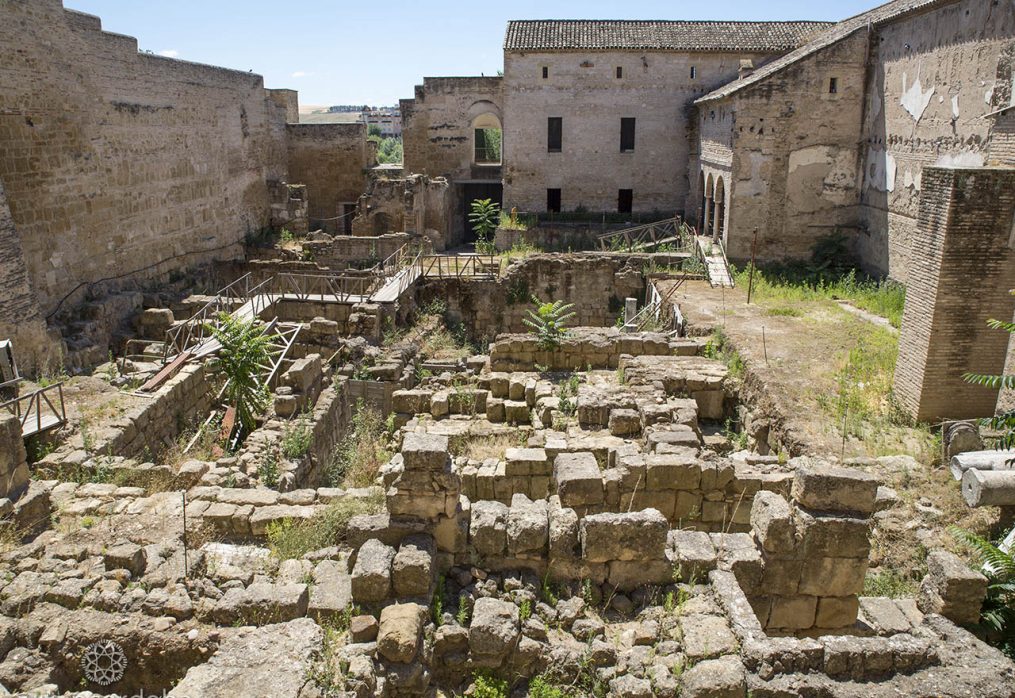
From the Catholic Monarchs’ Alcázar you can still see the towers and walls built by Alfonso XI, the hall associated with the audience with Columbus, the royal baths and gardens that, although heavily transformed in the 20th century, keep the spirit of the water garden. Bear in mind that in 2026 the monument has been undergoing conservation works: the gardens reopened on 16 June, and it is worth checking the city council website to see which interior rooms are open.
Frequently asked questions about the Catholic Monarchs in Córdoba
How long did the Catholic Monarchs live in Córdoba?
They did not live there continuously, as the court was itinerant, but between 1482 and 1492 they spent long periods in Córdoba while directing the Granada War. During that decade the Alcázar was their usual residence in the city and one of the main centres of government of the kingdom of Castile.
Which child of the Catholic Monarchs was born in Córdoba?
The infanta Maria, born in Córdoba on 29 June 1482, as preparations for the Granada War were under way. She was the fourth child of Isabella and Ferdinand and, in time, became queen of Portugal by marrying King Manuel I after the death of her sister Isabella.
Did the Catholic Monarchs receive Columbus in the Alcázar of Córdoba?
Columbus arrived in Córdoba in 1486 following the court, and tradition places one of his meetings with the monarchs in the Alcázar, where he presented his project. The episode is commemorated today by the sculpture group in the gardens, although the final agreement, the Capitulations of Santa Fe, was signed in 1492 near Granada.
Can you visit the Alcázar where the Catholic Monarchs lived today?
Yes. The Alcázar of the Christian Monarchs is a municipal monument open to visitors. In 2026 it has been undergoing conservation works: the gardens reopened on 16 June and some interior rooms may be closed, so it is best to check the official Córdoba City Council website before you go.
Relive its history with a guide
The stones of the Alcázar say much more when someone puts you in the shoes of Isabella and Ferdinand’s court. Compare the best guided tours of the Alcázar of Córdoba and discover all these stories on site.